


How to Update an Aging Boathouse in Muskoka
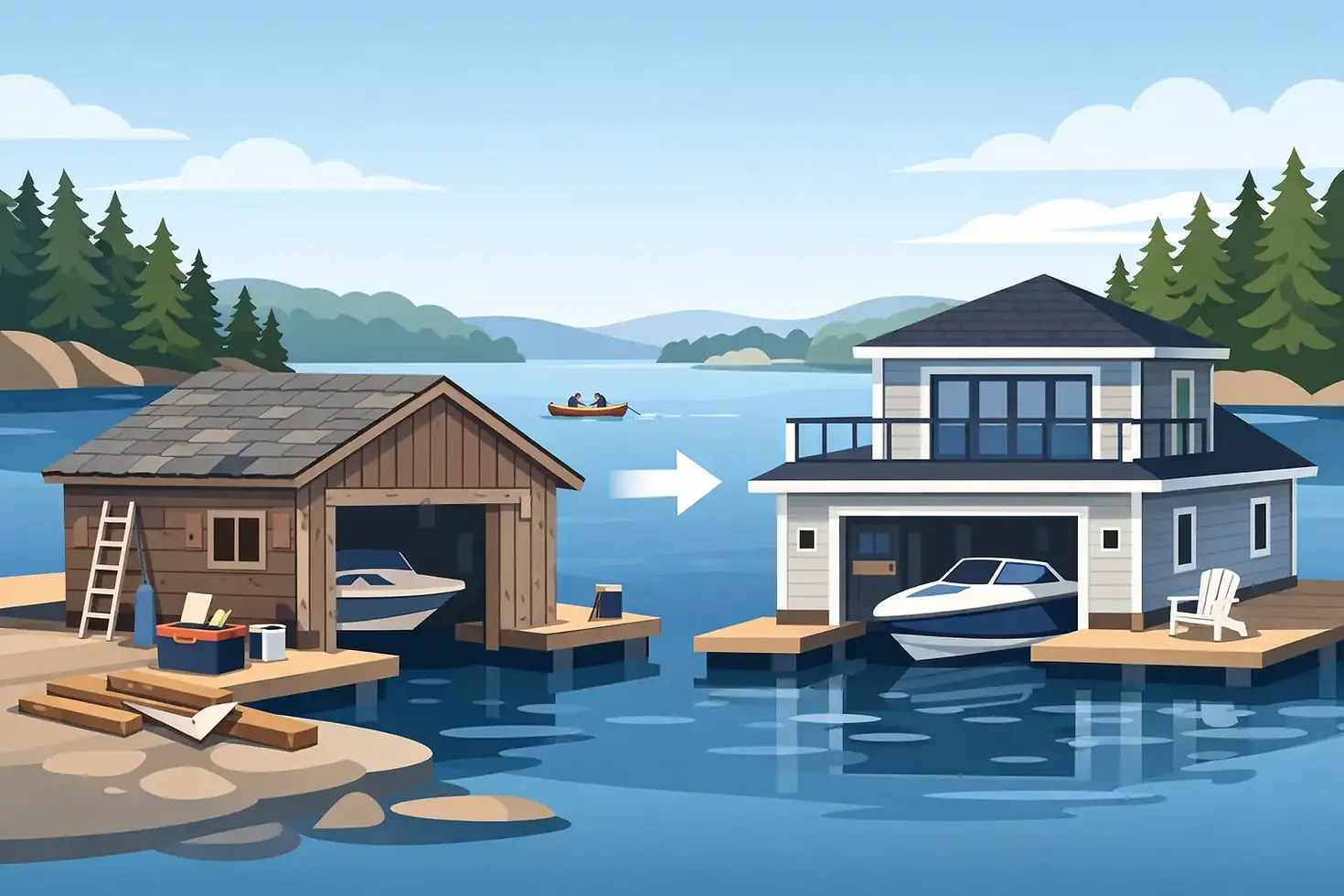
A boathouse often holds more than watercraft. It holds the memory of first swims, quiet coffee at the shoreline, and long weekends with family. Knowing how to update an aging boathouse starts with respecting that history while addressing the parts of the structure that can no longer be left to another season.
On a Muskoka property, a boathouse renovation is rarely just cosmetic. Exposure to water, changing ice conditions, sun, wind, and seasonal use can affect everything from support systems and roofing to doors, wiring, and finishes. A thoughtful update protects the investment, improves daily use, and helps the building feel like it belongs with the rest of the property.
Start With the Structure, Not the Surface
Fresh siding or a new coat of paint can make an old boathouse look better quickly, but they should not be the first priority. Begin with a close review of the elements that carry the building and keep it dry: foundation or cribbing, posts, framing, floor system, roof structure, and connections to the dock or shoreline.
Look for sagging rooflines, soft decking, cracked or shifting supports, recurring water intrusion, rusted fasteners, and doors that no longer operate smoothly. These are often signs that a larger repair is needed beneath the visible finish. In older waterfront structures, small problems can spread when moisture has had years to work its way into concealed framing.
A site visit by an experienced waterfront builder brings useful perspective here. The question is not simply whether a component can be repaired. It is whether repair will provide a dependable long-term result, or whether rebuilding that portion will better protect the whole structure.
Address water where it enters
Roofing, flashing, eaves, and drainage details deserve close attention. A boathouse lives at the edge of the water, but rainwater still needs a controlled path off the roof and away from vulnerable walls, openings, and structural connections.
Replacing worn roofing, repairing flashing around transitions, and improving ventilation can prevent moisture problems that are easy to miss until damage is advanced. If the building has an upper deck, inspect its waterproofing and drainage carefully. That deck can be one of the boathouse's best features, but only when the assembly below it is properly protected.
Plan the Boathouse Around How You Use It Now
Many aging boathouses were designed around a different kind of cottage life. The family's boats may have changed. Storage needs may be greater. Grandchildren may now use the waterfront. Or the upper level that once sat empty may be ready to become a favorite gathering place.
Before choosing materials or finishes, decide what the updated space needs to do. A practical plan may combine protected boat storage, space for paddles and life jackets, a clean workshop area, a waterfront sitting room, and a more welcoming deck above. The best layout avoids forcing one area to do too many jobs poorly.
Boat slips deserve particular attention. Confirm that dimensions, clearances, doors, lifting systems, and access routes suit the watercraft you own today, not the boat the structure was built around years ago. Better lighting and organized storage can make launch days easier while reducing clutter along the dock.
If you are considering a lounge, bar area, changing space, or sleeping quarters, begin with the building's permitted use and existing services. A design that looks simple on paper can require major upgrades to structure, plumbing, electrical systems, insulation, or access. Early planning keeps these decisions connected rather than turning them into surprises during construction.
Respect Waterfront Rules and the Existing Site
Updating a boathouse in Muskoka requires more than a good design. Setbacks, shoreline requirements, height limits, environmental considerations, and approvals can shape what is possible. The rules that apply to a repair may differ from those affecting an addition, upper-level change, demolition, or full rebuild.
This is one reason local experience matters. A builder familiar with waterfront work can help distinguish between improvements that preserve an existing structure and changes that may trigger a broader approval process. They can also assess practical site realities, including barge access, narrow cottage roads, steep terrain, mature trees, and the need to protect the shoreline during construction.
Good site planning is part of good workmanship. Materials should be staged carefully, the water should be protected from construction debris, and access should be coordinated so the project causes as little disruption as possible to the cottage and neighboring properties.
Choose Materials That Age Well by the Water
A boathouse does not need to look overly new to perform like a new building. In fact, the strongest renovations often blend updated materials with the character of the original cottage and landscape. The goal is a finish that feels established, not a structure that competes with the shoreline.
Material selection should balance appearance, maintenance expectations, and exposure. Durable siding, properly detailed trim, quality windows and doors, marine-appropriate hardware, and moisture-tolerant flooring all help a boathouse stand up to repeated seasonal changes. In shaded areas, finishes also need to account for slower drying and the potential for mildew.
Natural wood remains a defining part of Muskoka style, especially on interior ceilings, railings, doors, and covered deck areas. It does, however, need the right finish and a realistic maintenance plan. Composite and metal components can reduce upkeep in high-wear locations, but should be selected with care so they complement rather than overpower the property's architecture.
Improve safety without making it feel industrial
An aging boathouse may need safety upgrades that are not immediately visible in a photograph but make a meaningful difference in use. Non-slip surfaces, secure railings, code-appropriate stairs, improved exterior lighting, updated electrical systems, and clearly organized storage all contribute to a safer waterfront.
Electrical work should be treated seriously around water. Older wiring, outlets, panels, and lighting may not meet current needs or safety expectations. A well-planned update can add lighting where it is actually useful, support boat equipment properly, and create a more comfortable environment after sunset without filling the building with harsh fixtures.
Preserve Character Where It Counts
Not every old feature needs to go. Original timber framing, distinctive doors, stone details, exposed rafters, or a well-loved upper deck can become the elements that give the renovation its identity. The key is to preserve them only when they are structurally sound or can be responsibly restored.
A successful renovation often pairs old and new intentionally. Reclaimed-looking wood may sit alongside cleaner, more durable windows. A traditional gable form may conceal modern insulation, wiring, and ventilation. The result feels familiar to the family, while performing better through wet springs, hot summers, and long winters.
This approach also helps the boathouse relate to the main cottage. Matching every material exactly is not always necessary, but repeating a roof color, trim detail, railing style, or wood tone can make separate buildings feel planned as one waterfront property.
Build in the Right Season, With a Clear Plan
Waterfront work calls for coordination. Weather, water levels, access, material deliveries, approvals, and the cottage calendar all affect when a project should begin. Major structural work may be best completed outside the busiest part of your family's cottage season, while smaller finish improvements may fit more easily around it.
Clear communication matters just as much as the construction schedule. Ask for a defined scope of work, decisions that need to be made before construction begins, and regular updates as the project progresses. At Rae-Dius Construction, that hands-on approach is central to helping owners stay informed while work is underway.
An aging boathouse does not have to remain a compromise between nostalgia and practicality. With the right assessment and a plan suited to your property, it can become the place where the day begins, the boats are protected, and everyone naturally gathers before heading back to the cottage.



Comments