


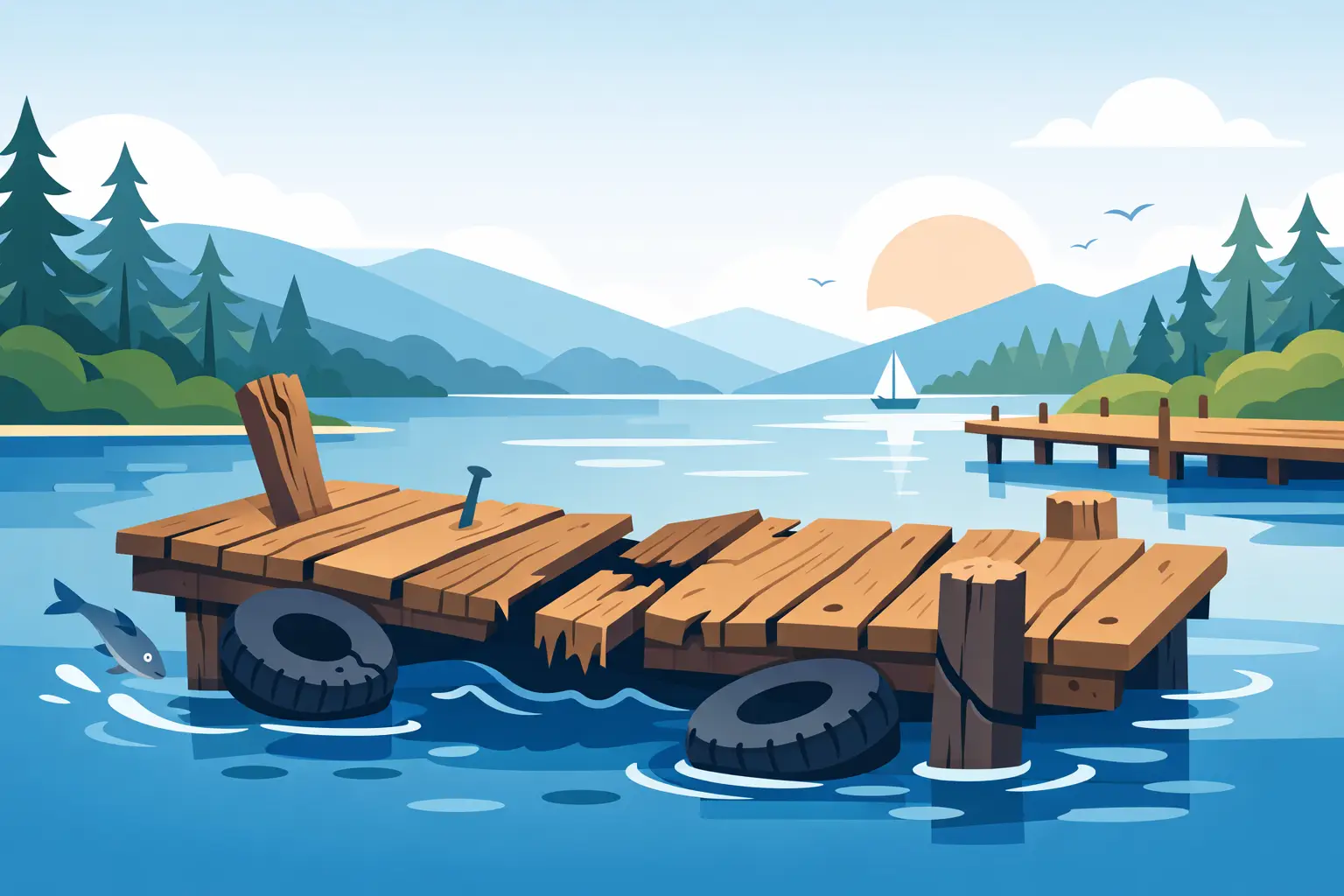
7 Signs Your Dock Needs Replacement
One loose board can turn a quiet morning at the lake into a real safety issue. If you have started noticing soft spots underfoot, wobble at the shoreline, or hardware pulling away from the frame, those are often early signs your dock needs replacement, not just another quick repair.
For many Muskoka property owners, a dock is part of everyday cottage life. It is where kids jump into the water, where guests arrive by boat, and where the season begins and ends. Because it handles constant exposure to water, sun, ice, and changing lake levels, a dock can age faster than many homeowners expect. The question is not whether it will need major attention at some point. It is whether you catch the warning signs early enough to make the right decision.
Why dock problems tend to get worse quickly
Waterfront construction lives in a harsher environment than almost anything else on your property. Moisture works into boards and framing, freeze-thaw cycles open up cracks, metal fasteners corrode, and shifting ice can put stress on the entire structure. A dock may still look acceptable from a distance while its real problems are developing below the deck surface or at the points where it meets the shoreline.
That is why cosmetic repairs can sometimes give a false sense of security. Replacing a few boards may improve the appearance, but if the support system is failing, the dock is still on borrowed time. A proper assessment looks beyond what is most visible and considers how the structure is performing as a whole.
1. The dock feels unstable when you walk on it
A dock should feel solid and predictable. If it sways, shifts, dips, or bounces more than it used to, that is not something to ignore. Movement often points to deeper structural wear, including weakened framing, loose connections, failing supports, or settlement at the base.
Some minor movement can happen depending on dock type and water conditions. Still, there is a clear difference between normal flex and a structure that no longer feels trustworthy. If people instinctively slow down, step around certain sections, or avoid carrying gear across it, that is a practical sign the dock is no longer performing the way it should.
2. You are seeing widespread rot, splitting, or soft wood
Surface weathering is common on older wood docks. What matters is whether the wood is still structurally sound. If boards feel spongy, split deeply, crumble at the edges, or show dark areas that stay damp, deterioration may be well beyond the top layer.
Rot rarely stays isolated for long in a waterfront setting. Once moisture gets into deck boards, joists, or posts, the damage can spread through connected components. At that point, replacing one section may not solve much. When deterioration is broad or keeps returning after repairs, replacement is often the smarter long-term move.
3. The support system is shifting, leaning, or sinking
One of the clearest signs your dock needs replacement is trouble in the structure underneath. Posts that lean, cribbing that has shifted, floating sections that no longer sit correctly, or visible settlement near the shore can all indicate that the dock is losing its foundation.
This kind of problem matters because the dock relies on alignment and load distribution to remain safe. Once supports move out of place, stress transfers to other areas. That can lead to warped framing, cracked connections, and uneven deck surfaces. In Muskoka, seasonal ice and water movement can make these issues worse from one year to the next.
A support problem is not always fixable with a simple adjustment. Sometimes the original system has reached the end of its service life, or site conditions have changed enough that a different dock design makes more sense.
4. Fasteners and hardware are failing
Metal components often tell the story of an aging dock before the full structure does. If bolts are rusted through, brackets are twisting, screws keep backing out, or connection points are separating, the dock may be losing strength in places you cannot easily see.
Hardware failure is especially concerning when it appears in multiple sections at once. A few replaced fasteners are normal maintenance. Widespread corrosion usually means the dock has spent years under stress and exposure. In those cases, new boards alone will not restore the dock's integrity.
Pay close attention where the dock connects to ramps, stairs, platforms, and shore attachments. These transition points take repeated force and often show wear first.
5. Repairs are becoming frequent and less effective
Most dock owners expect some upkeep over time. Replacing a board here and there, tightening hardware, or making seasonal adjustments is part of ownership. The concern is when those repairs start happening regularly and the dock still does not feel right.
If each spring begins with a new issue, or if one repair simply reveals the next weak spot, that pattern usually means the structure is aging out. There is a point where ongoing patchwork stops protecting your investment and starts delaying an inevitable rebuild.
This is where experience matters. A professional assessment can help distinguish between a dock that needs focused restoration and one that has reached the stage where replacement will better protect safety, usability, and property value.
6. Storm or ice damage has changed the dock's shape
After a harsh winter or a major storm, some damage is obvious. Boards may be missing, sections may be out of level, or the dock may have pulled away from its original position. Other damage is subtler. A slight twist in the frame, a change in elevation, or stress cracking around joints can all signal structural compromise.
When a dock has been hit hard by ice pressure or wave action, it is worth looking beyond what seems repairable on the surface. Waterfront structures can absorb force in ways that weaken them internally. Even if the dock is still standing, its load capacity and long-term reliability may be reduced.
This is especially important for family properties where the dock sees regular use all season. A dock that survived the winter is not necessarily a dock that is ready for another few years of dependable service.
7. The dock no longer suits how you use the property
Sometimes replacement is not driven by failure alone. It is driven by function. If the dock is too narrow, too short, difficult to access, or no longer works with your watercraft, swimming area, or shoreline layout, rebuilding may be the right decision even before complete structural failure occurs.
Older docks were not always designed for how families use waterfront properties today. You may want a more stable platform, better flow from shore to boat, improved integration with a boathouse, or materials that are better suited to long-term performance. In those cases, replacement can solve both safety concerns and usability issues at once.
A well-planned dock should feel like part of the property, not an afterthought. It should support how you live at the water and hold up to the specific conditions of your site.
When repair still makes sense
Not every aging dock needs a full replacement. If the support structure is sound and the wear is limited to a few upper components, targeted repair can extend service life. That is often true when damage is isolated, the dock remains level and stable, and the underlying system is still performing as intended.
The key is being honest about scope. A repair should solve the problem, not hide it. If the structure has multiple failure points, repeated movement, or widespread material breakdown, replacement is usually the more responsible option.
How to think about replacement before it becomes urgent
The best time to replace a dock is before safety becomes a concern and before damage spreads to connected shoreline features. Planning ahead gives you more control over design decisions, timing, and how the new dock fits your property.
For Muskoka homeowners and cottage owners, local site knowledge also matters. Shoreline grade, ice exposure, water depth, and access all influence what kind of dock will perform well over time. Working with a builder who understands waterfront construction helps ensure the new structure is not just attractive, but appropriate for the setting.
At Rae-Dius Construction Corporation, that practical, site-specific approach is part of how we help property owners make confident decisions about waterfront improvements. A good dock should feel secure, look right on the shoreline, and support years of cottage life without constant second-guessing.
If your dock is asking for more attention every season, that is usually the structure telling you something. Listening early can save you from larger problems later and help you move toward a waterfront setup that feels safe, durable, and ready for the way you actually use your property.


Comments